How did real estate perform in Colombia?

The real estate market in Colombia is undergoing a period of transformation that reflects both changes in the economy and in the habits of those who seek, buy, or rent housing. Factors such as inflation, regional dynamics, the digitization of supply, and new household preferences have shaped a constantly evolving landscape. Analyzing these trends allows us to understand how the sector is moving and to identify opportunities for buyers, renters, and investors in different cities across the country. Here we tell you how real estate performed in Colombia in the second quarter of this year.
Real estate supply in Colombia
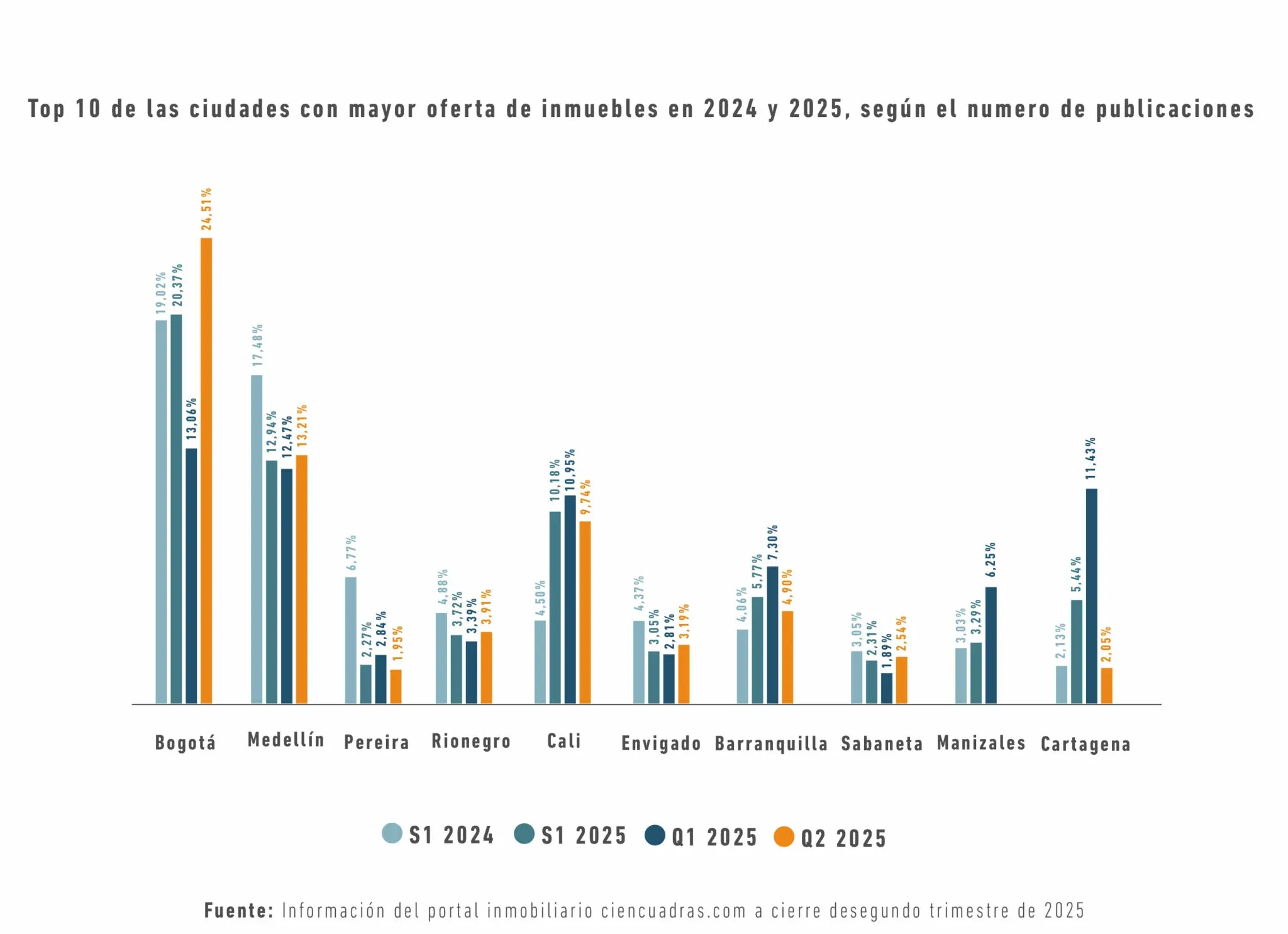
Bogotá reaffirmed its leadership by going from 19.02% of listings in S1 2024 to 20.37% in S1 2025. However, the focus is not only on its growth, but also on the strength of emerging cities. Cali doubled its share from 4.50% to 10.18% and established itself as a new hub for real estate investment. Likewise, Barranquilla, Cartagena, and Manizales also gained presence, showing a less centralized market with greater regional opportunities.
In 2025, the first quarter accounted for almost 25% of publications in Bogotá and Medellín, but in the second quarter, Barranquilla, Cali, and Rionegro stood out, all with shares above 5%. This reflects sustained demand and more active digital strategies in these regions.
Prices of homes offered for sale
New apartments registered an 8.23% increase in prices, driven by higher construction costs, inflationary adjustments, and the growing preference for vertical housing in urban areas. In contrast, new houses fell by 6.05%, a trend associated with lower demand in peripheral areas and commercial strategies implemented to boost sales in a more competitive environment.
In the used housing market, the trend was positive across all segments. Used apartments rose 5.26%, confirming their appeal due to strategic location and immediate delivery. In Medellín, the category apartments for sale in Medellín consolidated its position as one of the most in demand, standing out for its appreciation in areas with high connectivity and service offerings. Used houses led the growth with an increase of 9.70%, driven by the appreciation of land in suburban areas and the search for more space and quality of life.