Welcome to Alberto Álvarez Real Estate. I'm your virtual assistant and I'm here to help you.
Which service are you interested in?
Rent a property
List a property
Buy a property
Sell a property
Real estate projects
Administrative area
PlaceholderPlaceholder
0
PlaceholderPlaceholder
0
Subscribe to our Newsletter
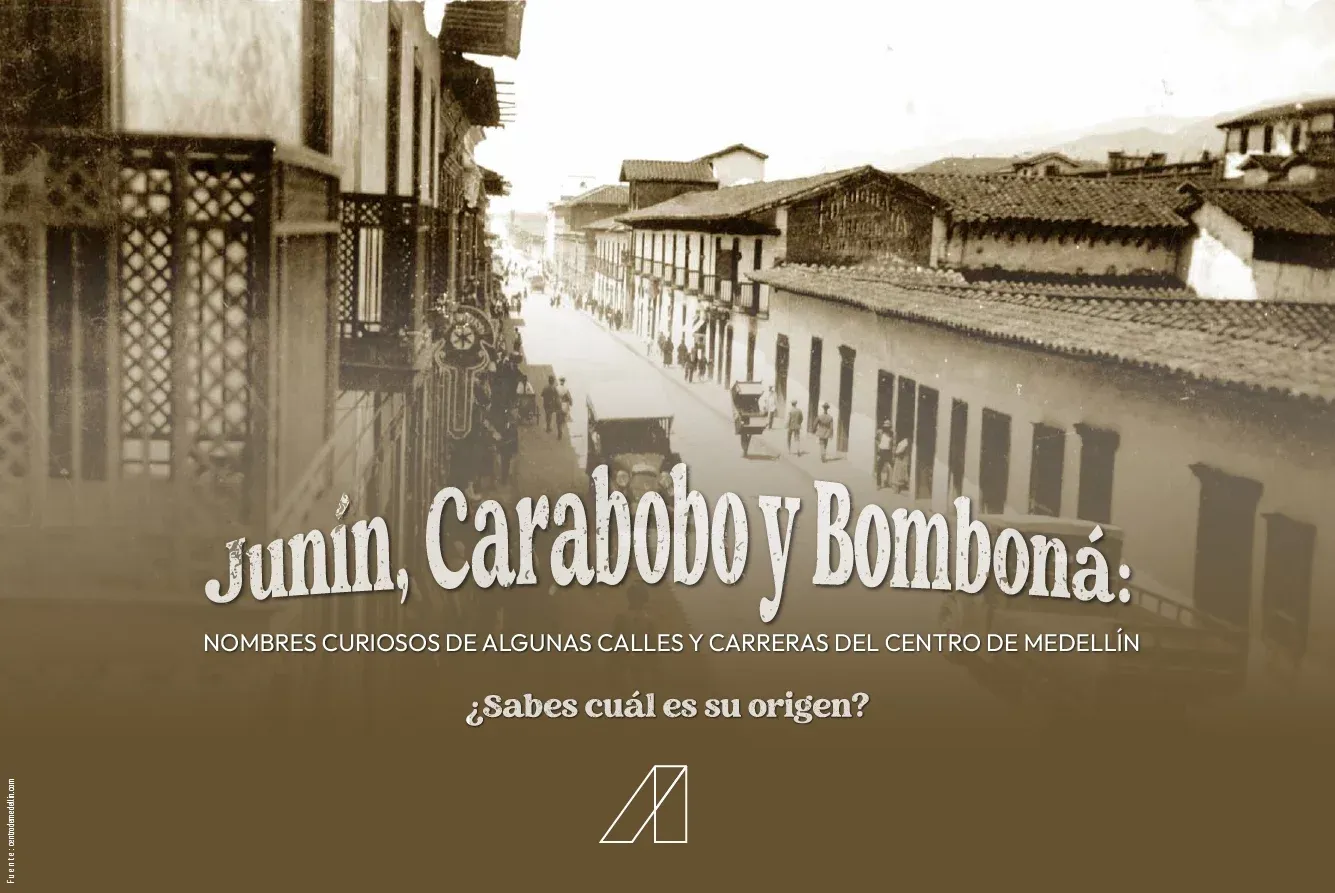
Junín, Carabobo, and Bomboná: Curious Names of Some Streets and Avenues in Downtown Medellín. Do You Know Their Origin?
Downtown Medellín tells us stories through its shades, colors, and memories that make us feel part of every corner—stories that move us and make us grateful to all those who once dreamed of being part of this cultural legacy of growth and evolution.
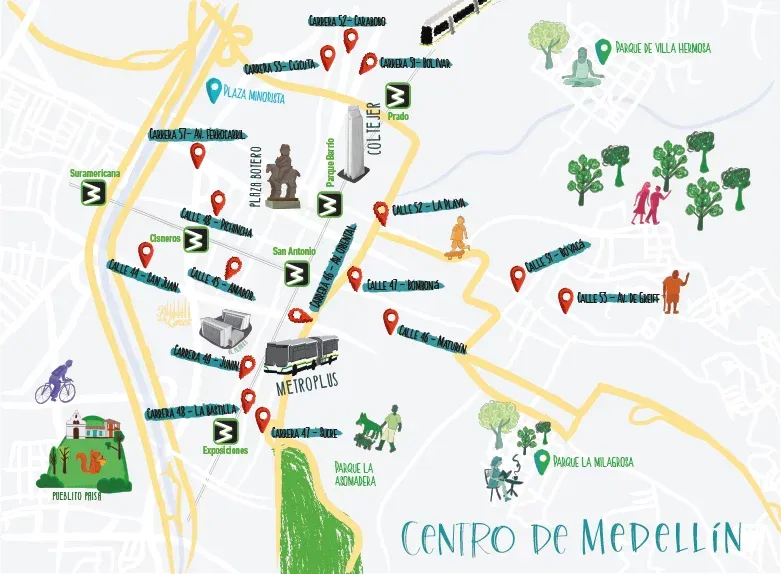
A couple of weeks ago, I decided to take a walk through downtown Medellín to find out where some of the names of its streets and avenues come from. It all began at Carrera 50 and Calle 50, right where the city’s street numbering system starts. For both residents and tourists, this place—Parque Berrío—is one of the most attractive spots in downtown Medellín. Just a few meters away are La Candelaria Church and Plaza Botero, places that blend art and culture, with photographers and artisans who have captured through their images and crafts the passing of time, the evolution, culture, and architectural development of our city.
Downtown Medellín has witnessed the fulfillment of the dreams of many Colombians who have found the perfect place to achieve their goal of opening their own businesses. Due to the high commercial demand, retail spaces for rent in Medellín have become the perfect opportunity for many entrepreneurs to contribute to the city’s progress.
Culturally and across generations, street nomenclature is what has named our city’s streets, leaving somewhat forgotten the identity each one holds. Every name evokes historical events and figures that are part of the cultural wealth we have today.
For my part, I visited each place with the eyes of a tourist, seeing beautiful spots where many only see routine. My feet followed the path along Calle 49, Ayacucho, one of the oldest streets, which received this name after the battle that sealed Peru’s independence. Previously, this street was known as “La Amargura.”
I continued my journey until I reached Calle 47, Bomboná, a place named after the site of one of the bloodiest and most fiercely fought battles of our war of independence, in the nearly inaccessible hills of Bomboná. Under the command of the liberator Simón Bolívar, enemy forces led by the Spanish colonel Basilio García were defeated. Today, it is interesting to see the changes in this area: its streets were once cobblestoned and its houses were distinguished by balconies, wooden eaves, and high tiled roofs. Now, we see a contrast between commerce and residential life, with commercial properties for rent in Medellín taking center stage in this area.
Our history brings back the memory of two heroes of independence as well as a great entrepreneur from our city, Carlos Coriolano Amador, who fortunately left us important works that have endured over time and made a difference despite the changes we have experienced. One of these is the well-known Calle 45, Amador, which was named in his honor.
I arrived at Calle 44, San Juan, a place that, despite being widely known today as a main road with broad connectivity, does not have a history that stirs us with heroic feats etched into memory. Today, this street represents opportunities for growth, entrepreneurship, and the fulfillment of dreams, as warehouses and retail spaces for rent in Medellín stand out here.
I continued along a place that connects eras and tells stories—without a doubt, one of the first streets opened in the Villa de la Candelaria. Calle 51, Boyacá, speaks of both past and present; every corner bears a mark that reflects a city rich in history and important figures. The origin of its name honors the battle fought on August 7, 1819, at the historic site of Boyacá.
And how could we not mention Calle 53, also known as Avenida de Greiff, named in honor of a person who contributed to and envisioned the progress of the city. He was Carlos Segismundo de Greiff, a Swedish engineer who arrived in the country in 1826 and traveled throughout Antioquia carrying out mining and exploration studies. Thanks to this work, he was able to produce a map of Antioquia, lithographed in Paris in 1857.
Finally, among the streets, I visited 54 Caracas, 55 Perú, 56 Bolivia, and 57 Argentina. It is believed that this large area was a gift from an Englishman to the city, under the condition that these streets bear the names of the Latin American countries liberated by Simón Bolívar, becoming yet another tribute to this hero.
I continued my journey along Carrera 49, Junín, and how could I not feel proud, knowing that Medellín is one of the few cities whose downtown has two pedestrian areas—and I was standing in one of them. I remembered how, in the past, one of the favorite activities was “Juniniar”: visiting a colonial area of tradition and commerce that became a favorite pastime for many families, who would stroll through it every Sunday dressed in their best clothes. This area was named in remembrance of the battle fought on August 6, 1824, on the plain that bears the same name, in the lands of Upper Peru.
I also had the opportunity to visit Astor, a traditional pastry shop in Medellín that opened its first location in 1960, working hand in hand with Alberto Álvarez Inmobiliaria. While there, I was advised to visit Carrera 48, Pasaje La Bastilla, which has become a historic landmark in the city. Out of curiosity, I discovered that this was the site of Medellín’s first café as a commercial establishment, which is how it got its name. Today, it is recognized as the area where residents can find all kinds of books.
Likewise, there are places that have served as the perfect setting for important events in our city. Carrera 46, better known as Avenida Oriental, has witnessed the silleteros parade, myths, and legends, and also provides a north–south connection, drawing a division between the east and west. It is key to mobility and commerce for the dreamers of the area.
I also ventured along Carrera 52, Carabobo, which once again takes its name from a place in Venezuela where major battles were fought during the war of independence. This area runs from north to south through the city, connecting families, friends, and tourists who enjoy visiting towns throughout the department. It is one of Medellín’s most important arterial roads.
This is only the beginning of an exploration of this beautiful city and what it means for Alberto Álvarez to be part of it and its progress. We were born in the city center and have witnessed every transformation. We have also seen how every retail space and every warehouse for rent in Medellín becomes a place that drives each entrepreneur who dreams of finding their space in this part of the city.
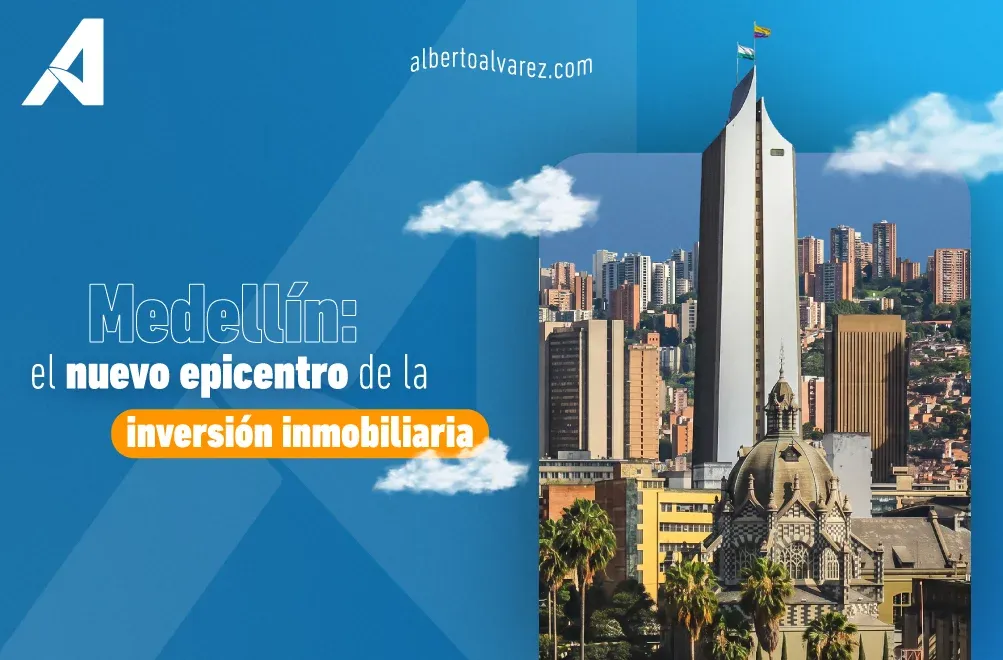
Speaking today about real estate investment in Colombia means speaking about Medellín. The city has evolved from being solely a benchmark of urban transformation to becoming
In recent years, Medellín, the Aburrá Valley, and eastern Antioquia have undergone an unprecedented urban transformation. The major road construction projects are not